
Introduction
For OEMs (Original Equipment Manufacturers), every component used in machinery directly affects product quality, operational reliability, and customer satisfaction. Bearings are among the most critical mechanical components because they support moving parts, reduce friction, and ensure smooth performance.
However, many OEMs face a common decision: should they choose premium-quality bearings from a trusted supplier or buy cheaper alternatives to reduce initial costs? At first glance, low-cost bearings may seem economical, but over time they often create maintenance issues, downtime, and performance failures.
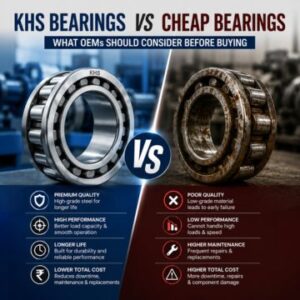
This is why understanding the difference between KHS Bearings vs cheap bearings is important before making a purchasing decision. Quality bearings offer better reliability, longer life, and lower operational costs, making them a smarter investment for OEM applications.
You can also read our guide on Bearing Supplier India: How to Choose the Right Industrial Partner for more supplier insights.
Why Bearings Matter in OEM Applications
OEMs manufacture machines that are expected to perform consistently under varying industrial conditions. Bearings are essential because they directly influence efficiency, speed, and durability.
Role of Bearings in OEM Equipment
- Support rotating shafts
- Reduce friction between moving parts
- Handle radial and axial loads
- Improve precision
- Extend machine life
Poor-quality bearings can compromise all of these functions and affect the final equipment performance.
The Problem with Cheap Bearings
Many industries choose cheap bearings to reduce immediate costs. However, these products often compromise on material quality, precision, and manufacturing standards.
Common Issues with Cheap Bearings
- Reduced load capacity
- Poor dimensional accuracy
- Faster wear and tear
- Overheating
- Frequent replacement
- Machine downtime
Cheap bearings may work temporarily, but they often fail under heavy-duty industrial conditions.
KHS Bearings vs Cheap Bearings: Key Differences
Material Quality
KHS Bearings are manufactured using high-grade steel and precision processes that improve strength and durability. Cheap bearings often use lower-quality materials, resulting in reduced performance.
Precision Engineering
OEM applications require exact tolerances. KHS Bearings are designed to meet industrial standards, ensuring smooth operation and reliability.
Load Capacity
Heavy machinery requires bearings that can withstand continuous pressure. Cheap bearings may fail under combined loads, while quality bearings maintain performance under demanding conditions.
Operational Life
High-quality bearings last significantly longer, reducing maintenance and replacement frequency.
Performance Consistency
KHS Bearings deliver stable performance across varying temperatures, speeds, and industrial environments.
Hidden Costs of Cheap Bearings
While cheap bearings reduce initial purchase cost, they often increase long-term expenses.
Increased Maintenance
Frequent breakdowns require more servicing and labor.
Production Downtime
Machine failures stop operations, causing production losses.
Replacement Costs
Low-cost bearings need replacement more often, increasing procurement costs.
Equipment Damage
Bearing failure can damage shafts, housings, and related components.
These hidden costs often exceed the savings from buying cheaper products.
Learn more in our guide on How to Increase Bearing Life: Maintenance and Lubrication Guide
Why OEMs Prefer Quality Bearings
OEM manufacturers prioritize product reliability because machine failures affect their brand reputation.
Benefits of Choosing Quality Bearings
- Better machine performance
- Longer operational life
- Reduced maintenance
- Improved customer satisfaction
- Lower long-term cost
A trusted bearing partner supports OEMs with consistent quality and technical expertise.
Applications Where Quality Bearings Matter Most
Heavy Machinery
Construction and industrial equipment require bearings that withstand high loads and vibration.
Automotive Equipment
OEMs in automotive applications need precision bearings for smooth operation.
Manufacturing Systems
Production lines depend on reliable bearings for continuous operation.
Material Handling
Conveyors and lifting systems require durable bearings to reduce downtime.
What OEMs Should Consider Before Buying Bearings
Quality Certifications
Check whether the bearings meet recognized industrial standards.
Technical Support
Choose suppliers who provide product guidance and application support.
Product Testing
Reliable manufacturers perform quality testing before dispatch.
Long-Term Value
Focus on performance, maintenance cost, and durability rather than purchase price alone.
Why KHS Bearings Is a Better OEM Choice
OEMs require dependable products that enhance machine reliability. KHS Bearings supports industrial businesses by providing:
- Quality-certified bearings
- Wide product range
- Technical expertise
- Reliable supply
- Consistent performance
This makes KHS a practical partner for OEM applications where quality cannot be compromised.
Conclusion
Choosing between KHS Bearings vs cheap bearings is not just about purchase price — it is about long-term operational efficiency. Cheap bearings may appear affordable initially, but they often lead to downtime, maintenance issues, and higher overall costs.
For OEMs, investing in quality bearings ensures better machine performance, lower lifecycle cost, and stronger customer trust. Selecting a trusted bearing partner helps improve product quality and business reliability.
For more industrial insights and updates, follow us on Instagram
Frequently Asked Questions (FAQs)
1. Why should OEMs avoid cheap bearings?
Cheap bearings often fail early, causing maintenance issues, downtime, and higher long-term costs.
2. How are KHS Bearings different from cheap bearings?
KHS Bearings offer better material quality, precision, durability, and long-term performance.
3. Do quality bearings reduce maintenance costs?
Yes, high-quality bearings require less frequent replacement and reduce maintenance expenses.
4. Which industries benefit most from quality bearings?
Manufacturing, heavy machinery, automotive, and material handling industries benefit significantly.
5. How do bearings affect OEM equipment performance?
Bearings improve machine efficiency, reduce friction, and support reliable operation under industrial conditions.

Comments are closed.