

Walk the floor of any manufacturing plant, and you will find linear guide rails silently carrying the load. From high-speed packaging automation to heavy-duty CNC machining centers, these components are the backbone of industrial precision.
However, many maintenance teams treat linear guides as “run-to-failure” components. This is a costly mistake. When a rail fails, you do not just pay for the replacement parts; you pay for expedited shipping, lost production hours, and the labor required to re-align the machine.
As mechanical engineers at KHS Innovation & Engineering LLP, we see it daily: over 90% of premature linear bearing failures are caused by improper lubrication and contamination, not manufacturing defects.
If you are tired of constantly replacing blocks and rails, this guide is for you. We have engineered the ultimate linear guide rail maintenance checklist—a practical, 10-point Standard Operating Procedure (SOP) you can deploy in your factory today.
What is a Linear Guide Rail? (Working Principle & Applications)
Before maintaining the system, it helps to understand exactly what you are protecting.
Working Principle
A linear guide system consists of a profiled steel rail and a bearing block (often called a carriage). Inside the block, rows of precision steel balls or rollers recirculate through internal channels. As the block moves along the rail, these rolling elements create a low-friction contact surface, allowing the system to move heavy loads with micrometer-level accuracy.
Typical Industrial Applications
-
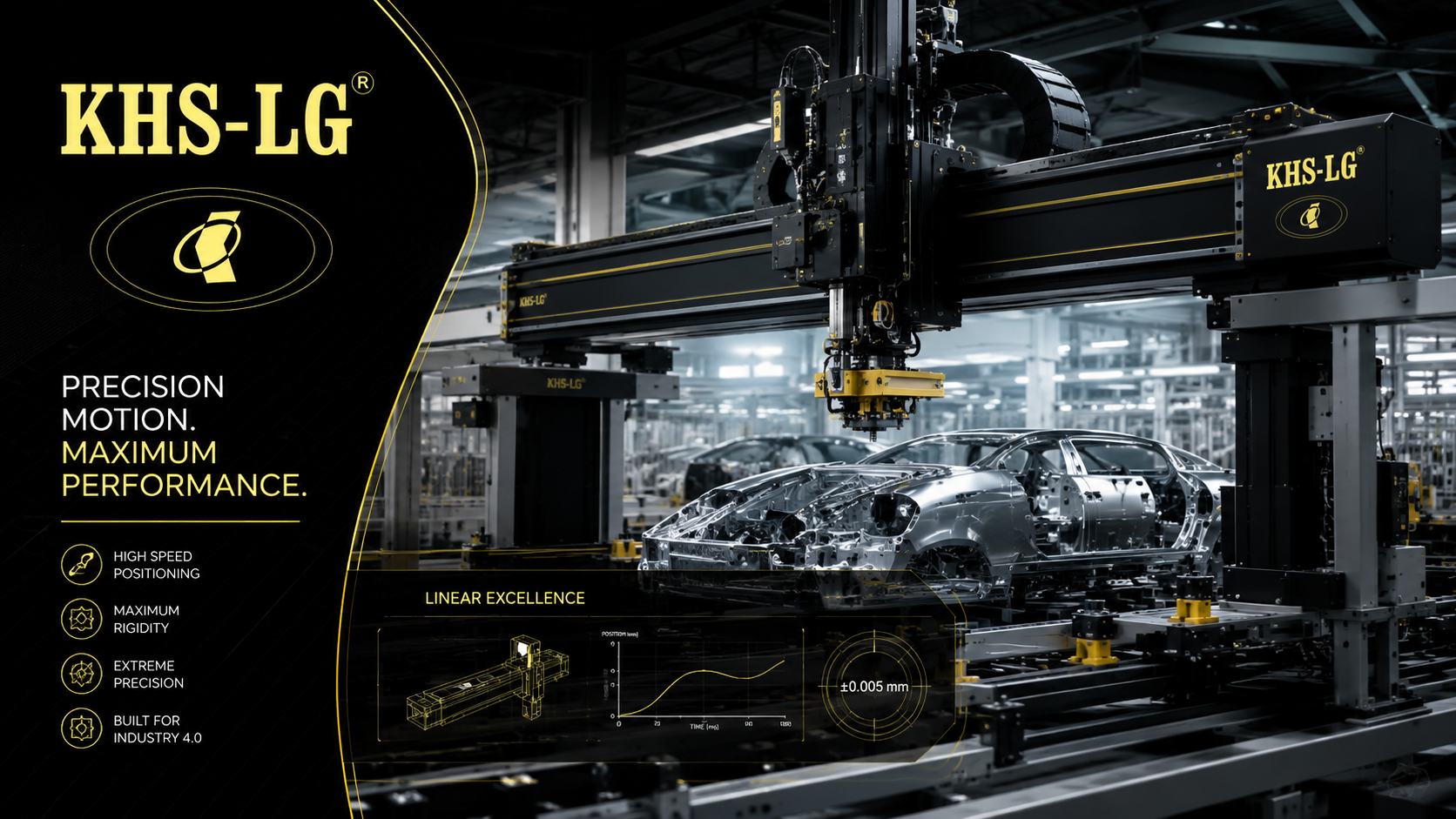
CNC Rail Maintenance: Used in vertical machining centers, lathes, and routers to guide the cutting tool.
-
Automation & Robotics: Gantry robots, pick-and-place systems, and automated guided vehicles (AGVs).
-
Medical Equipment: CT scanners and precision laboratory liquid handling systems.
-
Packaging: High-speed labeling, cutting, and sorting machines.
Advantages of Proactive Maintenance
-
Extended Lifespan: Proper care can double or triple the L10 life (basic rating life) of the bearing.
-
Maintained Precision: Prevents vibration and chatter marks on machined parts.
-
Energy Efficiency: Lower friction means servo motors draw less current.
Disadvantages of Neglect
-
Spalling: Metal flaking off the rail surface due to metal-on-metal contact.
-
Catastrophic Seizure: The bearing block completely locks up, potentially damaging drive mechanisms like ball screws or motors.
The Ultimate 10-Point Linear Guide Rail Maintenance Checklist
Implement this SOP in your facility to transition from reactive repairs to predictive maintenance.
1. Perform a Baseline Visual Inspection
Before wiping anything down, look at the rail in its operating state. Are there heavy piles of metal chips, wood dust, or coolant pooling around the carriage? Look for signs of linear rail wear, such as discoloration on the steel raceway (which indicates overheating) or visible rust.
2. Follow the Proper Cleaning Procedure
Knowing how to clean linear guide rails is critical. Never use an air hose to blast debris away from the rail; this forces microscopic contaminants past the seals and directly into the ball bearings.
-
Step 1: Use a clean, lint-free microfiber cloth to wipe away surface debris.
-
Step 2: For stubborn, dried grease, apply a mild, petroleum-based solvent (like mineral spirits) to the cloth.
-
Step 3: Avoid harsh chemicals containing chlorine or water-based degreasers, as they strip the micro-layer of rust preventative.
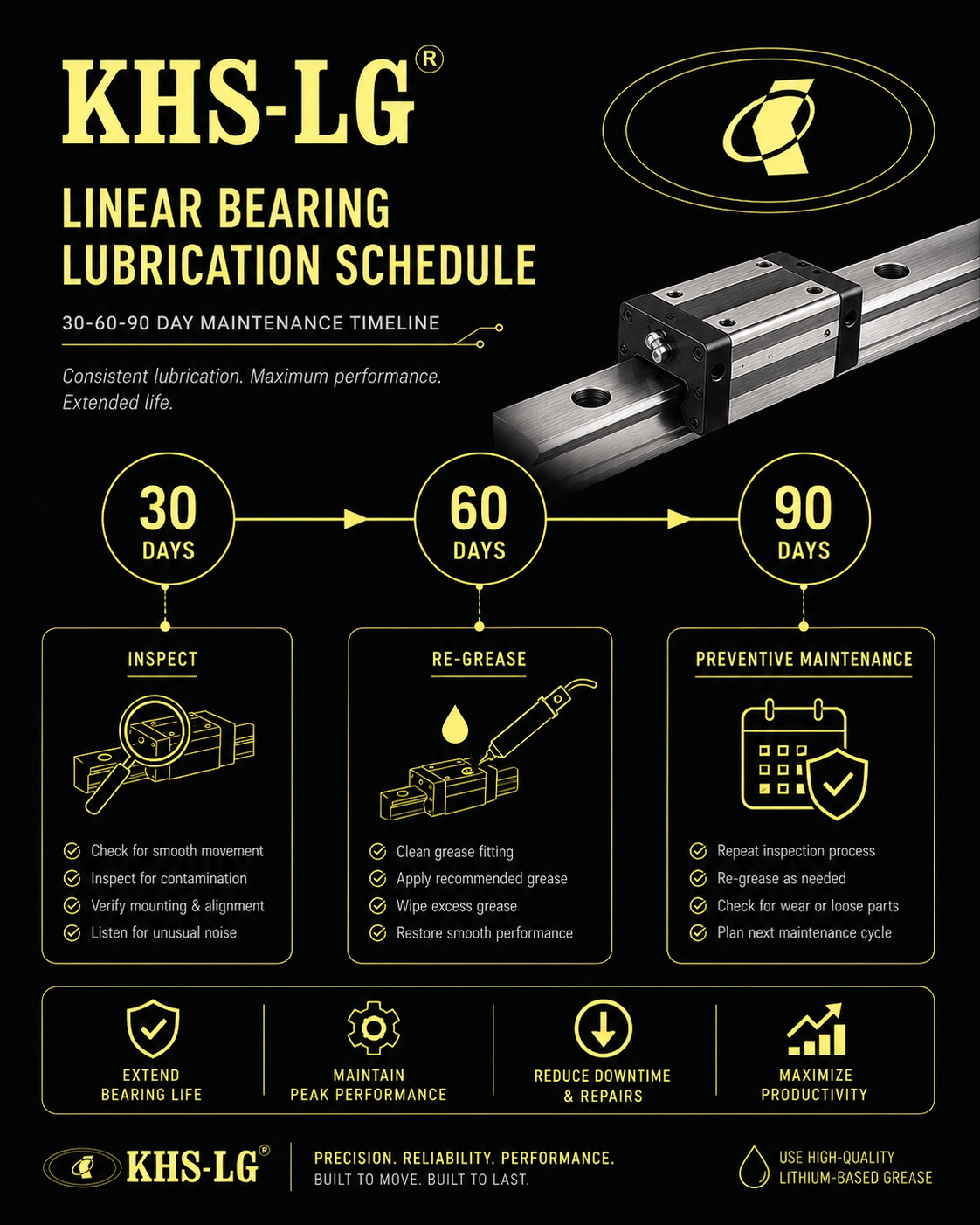
3. Establish a Linear Bearing Lubrication Schedule
Lubrication reduces friction, prevents rust, and dissipates heat. Your linear bearing lubrication schedule depends heavily on your operating environment.
-
Standard Environment: Lubricate every 100 km of travel or every 3 to 6 months.
-
High-Speed/Heavy Load: Lubricate every month or 50 km of travel.
-
Contaminated Environment: (e.g., woodworking, metal grinding) Lubricate weekly. The introduction of fresh grease helps purge contaminated grease out of the block.
4. Inspect Wiper and Seal Integrity
The end seals (wipers) located on the front and back of the bearing block are your first line of defense. Inspect the rubber lips. If they look frayed, torn, or curled backward, they are no longer keeping contaminants out. Replace worn wipers immediately—they cost a fraction of the price of a new bearing block.
5. Check for Preload Loss and Rigidity
Preload is the deliberate internal tightness of the bearing block, designed to eliminate play and increase rigidity. Over time, wear can cause a loss of preload. Grasp the carriage (with the machine locked out and safe) and attempt to rock it side-to-side and up-and-down. If you feel physical play or clicking, the block has worn beyond acceptable tolerances and requires replacement.
6. Verify Rail Alignment and Parallelism
If your machine uses two rails running in parallel (common in CNC rail maintenance), they must be perfectly aligned. Machine vibration, crashes, or settling foundations can shift the rails. Use a dial indicator to sweep the rail and ensure parallelism remains within the manufacturer’s specified micron tolerances. Misalignment causes uneven loading and rapid failure.
7. Monitor Operating Temperatures
During normal operation, feel the ambient temperature near the bearing block (use a safe infrared thermometer). A linear guide running significantly hotter than usual indicates high friction. This is usually caused by a lack of lubrication, excessive preload, or misalignment.
8. Listen for Abnormal Noise
A healthy linear guide produces a smooth, consistent “whirring” or “shushing” sound. If you hear grinding, crunching, or high-pitched squealing, stop the machine immediately. These are severe signs of linear rail wear and indicate that the rolling elements are either starved of lubrication or grinding against foreign debris.
9. Check Fastener Torque Settings
Machine vibrations loosen bolts over time. Check the mounting bolts on both the rail and the bearing block. Ensure they are torqued to the correct specifications. A loose rail will shift under heavy loads, causing immediate misalignment and binding.
10. Document Everything
Maintenance that isn’t documented didn’t happen. Maintain a logbook for every machine. Record the date of lubrication, the specific type of grease used, and any anomalies noticed during the visual inspection. This data is invaluable for diagnosing future machine issues.
How to Choose the Right Lubricant: Grease vs. Oil
Using the wrong lubricant is just as damaging as using no lubricant at all.
| Feature | Grease Lubrication | Oil Lubrication |
| Best For | Normal to heavy loads, low to medium speeds. | High-speed applications, continuous motion. |
| Maintenance Frequency | Periodic (Manual or auto-greaser). | Continuous (Requires automated drop/mist system). |
| Cooling Property | Poor. Does not dissipate heat well. | Excellent. Washes away heat and micro-debris. |
| Contamination Resistance | Good. Thick grease acts as a secondary seal. | Fair. Oil can attract dust if not properly sealed. |
| Common Types | Lithium-soap base (NLGI Grade 2). | Mineral-based hydraulic or way oils (ISO VG 32-68). |
Pro Tip: Never mix different types of grease (e.g., lithium-based with polyurea-based). The chemical reaction can cause the grease to harden or separate into oil and thickener, destroying the bearing.
Common Mistakes in Linear Motion Maintenance
Even seasoned engineers occasionally make these errors:
-
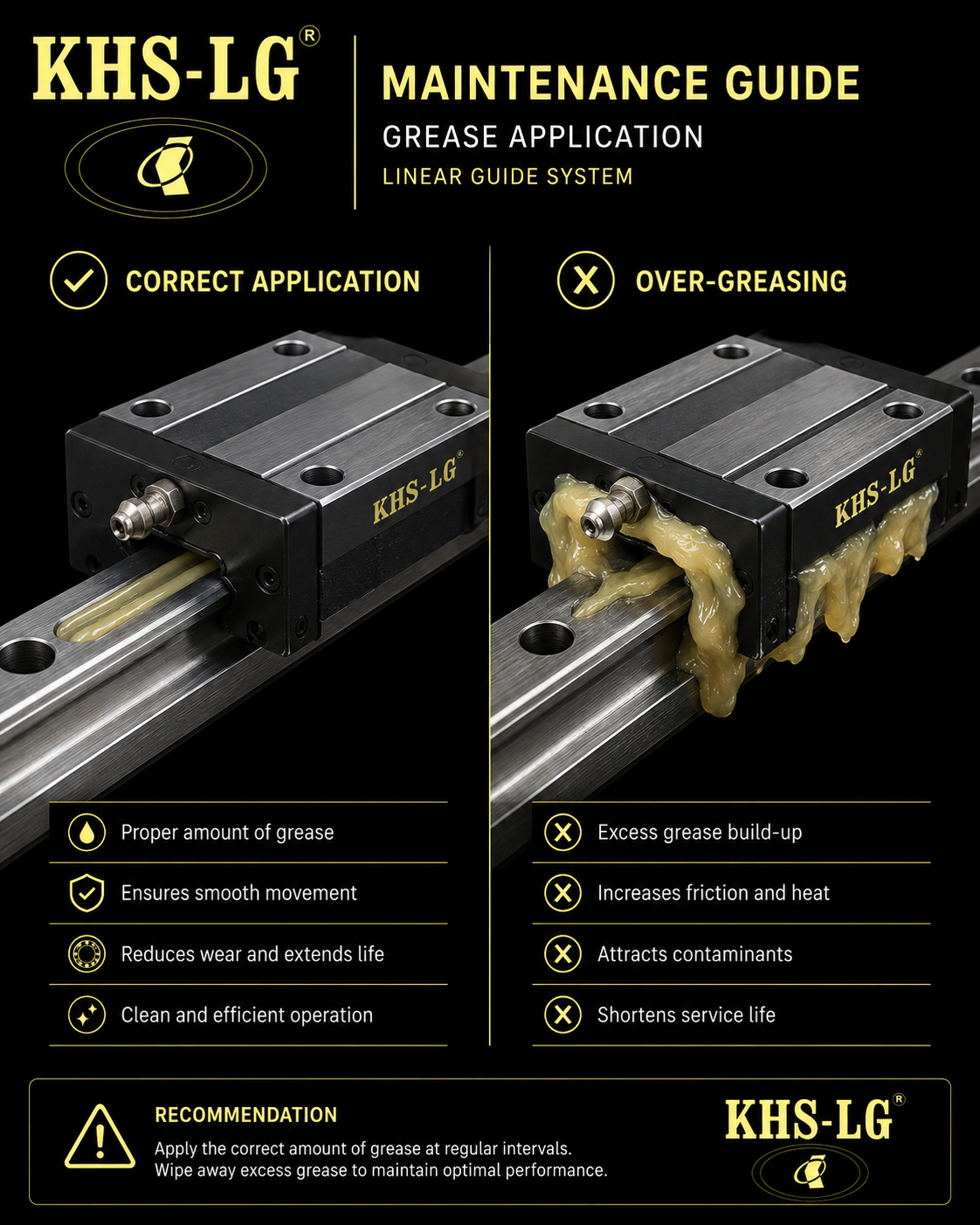
Over-Greasing: Pumping too much grease into the block increases rolling resistance, causes the system to overheat, and can actually blow out the rubber end seals.
-
Using WD-40: Standard WD-40 is a solvent and water displacer, not a heavy-duty lubricant. It will wash away your actual grease and leave the bearing dry.
-
Ignoring the Rail Plugs: The mounting holes on the rail must be covered with plastic or metal caps. If left open, debris collects in the holes and damages the block’s wipers as they pass over
Buying Guide: Knowing When to Replace vs. Repair
Industrial buyers frequently ask us: “How long does a linear guide last, and when should I just buy a new one?”
When to Repair/Maintain:
-
Slight surface rust on the rail (can be cleaned with a fine Scotch-Brite pad and oiled).
-
Damaged end wipers (can be easily replaced).
-
Minor loss of smooth motion due to old grease (can be flushed and re-packed).
When to Replace (Buy New):
-
Visible Spalling: If you see pitting or flaking on the ball grooves of the rail, the structural integrity is gone. It must be replaced.
-
Loss of Precision: If your CNC machine is producing out-of-tolerance parts and you have verified the block has internal play (loss of preload).
-
Missing Balls: If ball bearings have fallen out of the carriage, catastrophic failure has already occurred.
How to Choose a Replacement
When buying a replacement, ensure you match the manufacturer, size, precision class, and preload rating. Linear rails from different manufacturers are rarely interchangeable, even if they look identical.
Latest Industry Trends in Linear Motion
The industrial landscape is moving rapidly toward Industry 4.0. Here is what is changing in rail maintenance:
-
IoT Condition Monitoring: Modern factories are attaching vibration and acoustic sensors directly to linear blocks. These sensors send alerts to smartphones when friction increases, predicting a failure weeks before it happens.
-
Self-Lubricating Blocks: Many KHS-LG models now feature integrated resin lubrication pads. These pads continuously release a micro-film of oil onto the raceway, extending the maintenance interval to 10,000 km in clean environments.
Frequently Asked Questions (FAQs)
1. How often should I grease linear rails?
As a general rule, grease linear rails every 100 kilometers of travel, or every 3 to 6 months, whichever comes first. Harsh environments (dust, coolant) require weekly greasing.
2. Can I use lithium grease on linear rails?
Yes, high-quality lithium-soap-based grease (NLGI Grade 2) is the industry standard for general-purpose linear guide lubrication.
3. What are the first signs of linear rail wear?
The earliest signs include a change in operating noise (grinding or squeaking), a measurable loss of machine precision, and vibration during travel.
4. How do you clean rusted linear rails?
For surface oxidation, use a mild abrasive like a non-woven nylon pad (Scotch-Brite) soaked in light machine oil. Never use heavy sandpaper, as it will alter the rail’s precision dimensions.
5. Why are my linear bearing balls falling out?
Balls fall out due to catastrophic failure of the ball retainer inside the block, usually caused by a high-speed crash, severe overloading, or massive debris ingress blocking the recirculation path.
6. Can I put a new bearing block on an old rail?
It is generally not recommended. A heavily used rail will have microscopic wear. A new block on a worn rail will not have the correct preload and will wear out prematurely. It is best to replace them as a set.
7. How much does replacing a linear guide rail cost?
Costs vary wildly from ₹2,000 for miniature automation guides to over ₹1,00,000 for high-precision, heavy-duty roller guides used in large CNC centers.
8. What is the difference between a ball guide and a roller guide?
Ball guides use spherical balls and are best for high speeds and general automation. Roller guides use cylindrical rollers, offering significantly higher load capacity and rigidity, making them ideal for heavy metal cutting.
Conclusion & Next Steps
Stop viewing linear guide rails as consumable items. By implementing this 10-point linear guide rail maintenance checklist, you can drastically reduce downtime, save thousands in replacement parts, and ensure your machinery operates at peak precision.
Remember: visual inspections, correct cleaning methods, and a strict linear bearing lubrication schedule are the fundamental pillars of factory uptime.
Need Technical Support or High-Quality Replacements?
If your current linear motion systems are failing prematurely, or if you need help selecting the right linear guides for a new machine build, we are here to help.
Contact KHS Innovation & Engineering LLP today. Our mechanical engineers can provide expert technical consultations, help you audit your current maintenance SOPs, and supply world-class industrial bearings, power transmission, and linear motion products tailored to your exact application.
KHS Innovation & Engineering LLP
📞 +91 22 6978 6106
✉️ sales@khsbearings.com
🌐 www.khslg.com
Corporate Office:
A-2403, Marathon Futurex, Mafatlal Mills Compound,
N. M. Joshi Marg, Lower Parel East, Mumbai – 400013.

Comments are closed.