
A single wrong bearing wrong tolerance, wrong internal clearance, wrong grade does not simply fail on its own. It takes the equipment around it down with it: the shaft, the housing, sometimes the gearbox. For maintenance and procurement teams operating across Mumbai’s industrial belt from the manufacturing corridors of Bhiwandi and Thane to the engineering clusters of Navi Mumbai and Vasai-Virar the bearing supplier on speed-dial can be the difference between a two-hour fix and a three-day production halt. Yet most bearing procurement decisions still come down to price and familiarity, bypassing the technical and commercial checks that actually protect uptime.
This guide exists for the buyer who wants to do it properly before the machine goes down, not after.
What a Reliable Bearing Supplier in Mumbai Actually Looks Like
When your machine stops at 2 AM, you do not need a vendor. You need a supplier who knows bearings one who can identify the right replacement, confirm the specification, and have it to you before the shift changes. There is a fundamental difference between those two things, and most buyers only discover it after something fails.
Mumbai and its surrounding industrial zones form one of India’s most concentrated manufacturing regions. Bearings are among the most frequently sourced mechanical components across automotive, textile, pharma, packaging, pump, and general engineering sectors. The result is a busy, competitive supply market with wide variation in product authenticity, technical competence, and service reliability. Knowing what to look for is the buyer’s primary advantage.
| Factor | Commodity Reseller | Technical Bearing Supplier |
|---|---|---|
| Product range | One or two common series | Full range: ball, roller, needle, linear, angular contact, thrust |
| Technical support | Price quote only | Application advice, selection guidance, fit recommendations |
| Brand authorisation | Often unverified | Documented authorisations for stocked brands |
| Documentation | Basic invoice | Test certificates, ISO traceability, load/dimension data |
| Delivery reliability | Variable, unconfirmed lead times | Committed lead times with alternatives for out-of-stock items |
| Failure support | Replace and close | Root cause review and corrective recommendation |
For OEMs and machinery manufacturers, working with a technically qualified supplier reduces engineering risk from the specification stage. For plant and maintenance teams, it reduces the risk of repeat failures — which are almost always more expensive than the first one.
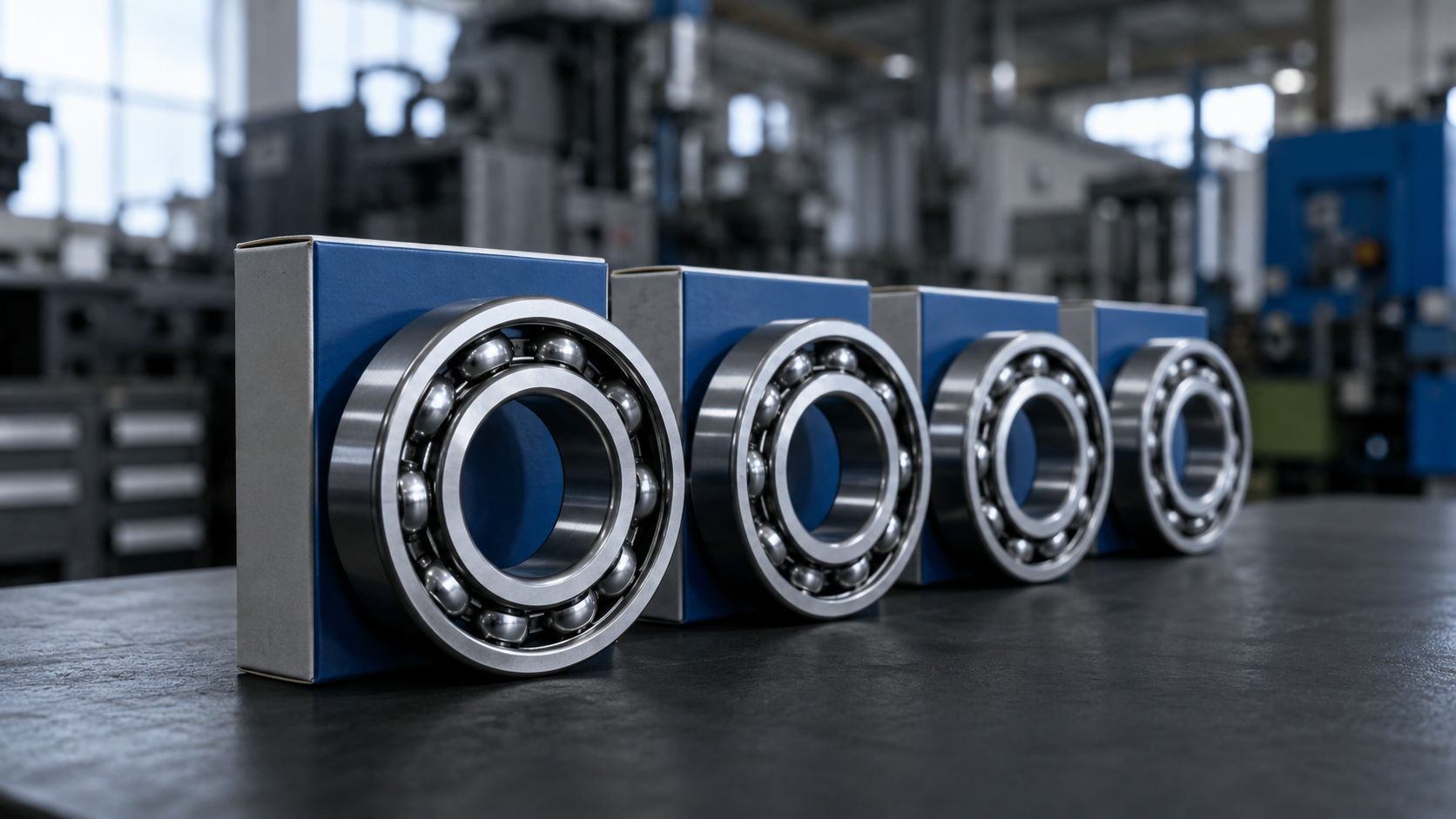
The Bearing Types Your Supplier Must Be Able to Source
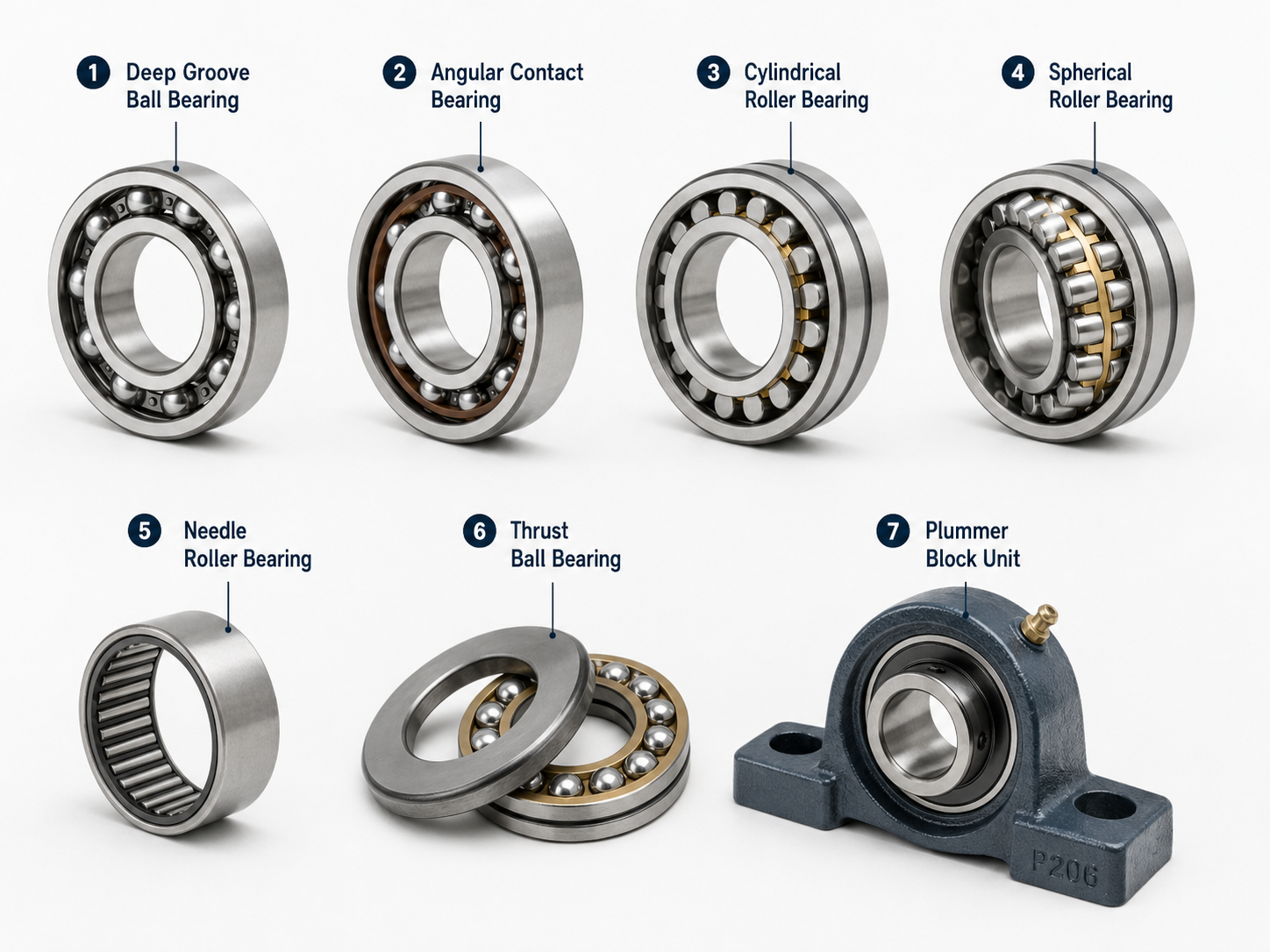
Before shortlisting any industrial bearing supplier in Mumbai, confirm they carry the bearing types your operations actually require. Many general distributors stock only the highest-volume standard series. Specialty or precision applications need a supplier who handles them routinely, not occasionally.
The primary bearing categories in Mumbai’s industrial procurement landscape:
- Deep groove ball bearings — highest-volume category; used across motors, pumps, fans, conveyors, gearboxes, and general machinery
- Angular contact ball bearings — combined axial and radial load applications; critical for spindles, gearboxes, and machine tool applications
- Cylindrical roller bearings — high radial load capacity; electric motors, compressors, industrial gearboxes
- Spherical roller bearings — misalignment-tolerant; paper mills, mining equipment, conveyor drives, heavy industry
- Needle roller bearings — compact, high load density; gearboxes, automotive transmissions, packaging and printing machinery
- Thrust ball and roller bearings — axial load management; vertical shafts, screw jacks, machine tools
- Track roller bearings — cam followers, conveyor systems, textile and printing machinery
- Plummer block / mounted housing units — shaft support assemblies in heavy and rotating equipment
If your operations include linear motion systems — linear guide rails, ball screw support units, or super linear bushings — confirm whether the supplier stocks or has reliable access to these. Not all bearing suppliers in Mumbai carry linear motion components. Sourcing them separately adds procurement complexity and extends downtime windows.
Industries Driving Bearing Demand in Mumbai
Understanding which sectors drive demand gives context to what depth and range you should expect from any industrial bearing supplier in the region.
| Industry | Primary Bearing Demand |
|---|---|
| Automotive and auto-components | High-precision, high-volume supply; strict dimensional and quality standards; OEM documentation essential |
| Textile and garment machinery | High-speed spindle and roller bearings; specific ISO/ABEC precision grades |
| Pharmaceutical and food processing | Sealed, stainless or food-grade bearings; contamination resistance; material traceability required |
| Packaging machinery | Mixed bearing types at varied precision grades; short lead times critical |
| Printing and converting | Track rollers, needle bearings, precision angular contact |
| Pumps, motors, compressors | Highest single-category volume for deep groove ball bearings |
| Construction and material handling | Spherical roller and tapered roller bearings; high-load environments |
A supplier serving Mumbai’s industrial base credibly should have demonstrable experience across several of these sectors. If they can only fluently discuss pumps and motors, they may not have the depth to serve a complex OEM or textile machinery application.
KEY INSIGHT
“In industrial procurement, a bearing supplier’s technical depth matters more than their price list. The cheapest bearing that fails early costs far more than the correctly specified one that runs for years.”
Not Sure Which Bearing Type or Series You Need?
KHS-LG’s team works with OEMs, plant engineers, and procurement managers to identify the right bearing specification for the application — not just the nearest available size. Share your operating parameters or part number and we will respond with a technically grounded recommendation.
→ Send Us Your Requirement
How to Evaluate a Bearing Supplier in Mumbai Before You Commit
Most sourcing decisions go wrong not because the buyer chose the wrong product, but because they skipped the supplier evaluation. Price and location are two of the least predictive factors for long-term supply reliability. Here are the criteria that actually matter.
1. Product Authenticity and Brand Authorisation
Counterfeit and substandard bearings are a documented and persistent problem in Indian industrial markets. The risk is highest with high-demand international brands, where the price differential makes imitation economically attractive. The consequences premature failure, unplanned downtime, equipment damage are invariably more expensive than any saving made at purchase.
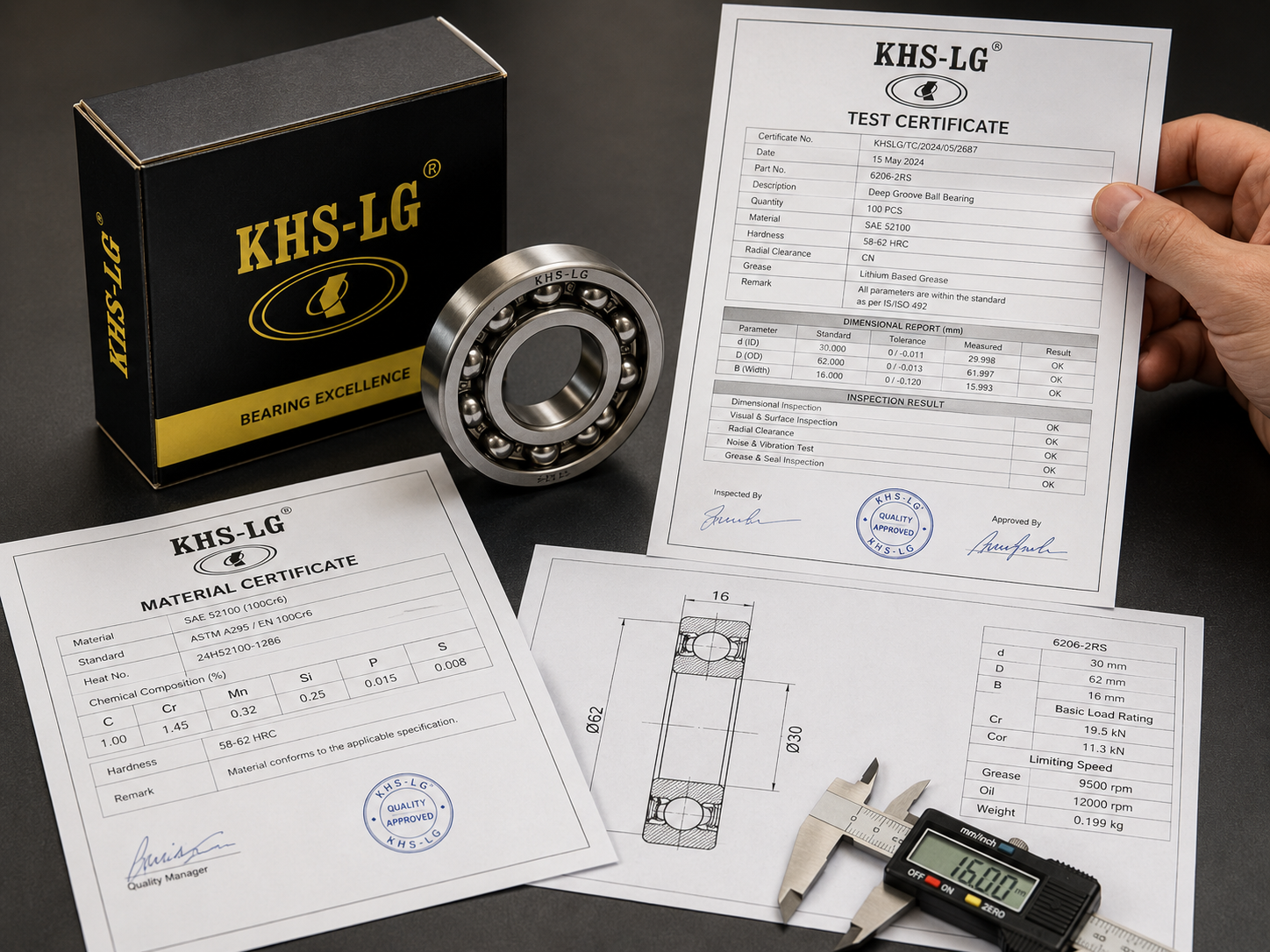
What to ask any bearing supplier in Mumbai:
- Are you an authorised distributor or stockist for the brands you supply?
- Can you provide a manufacturer’s certificate of conformity for this batch or order?
- Is the product traceable to a specific manufacturing run or date code?
Authentic bearings from established manufacturers carry consistent, precisely engraved markings: brand name, series designation, country of manufacture, and in many cases a holographic or QR-coded authentication element. Painted, stamped, or inconsistently marked products warrant immediate scrutiny. A supplier who cannot answer traceability questions clearly and without hesitation is a procurement risk no certificate can offset.
2. Technical Competence — Not Just a Sales Function
The best bearing suppliers in Mumbai employ technically trained staff engineers or experienced technical sales personnel who understand bearing selection principles, tolerance classes, lubrication requirements, and application-specific constraints.
Signs of genuine technical competence:
- They ask about your application before they quote
- They flag when the bearing you have specified is not the optimal choice for your load and speed conditions
- They understand dynamic load ratings (C), static load ratings (C₀), and basic rating life (L₁₀)
- They can advise correctly on whether you need an open, shielded (ZZ), or sealed (2RS) bearing for your operating environment
- They understand ISO/ABEC precision classes and when they matter
If the interaction begins and ends with price and availability, you are talking to an order-taker. That is fine for standard, repeat, non-critical spares. It is not sufficient for precision applications, OEM supply, or any bearing installed in a location that is difficult or expensive to access.
3. Stock Depth and Delivery Reliability
A supplier with limited stock is not an industrial supply partner they are an occasional vendor. For plant maintenance teams managing unplanned breakdowns, and for OEMs managing production schedules, stock depth matters directly.
What to confirm:
- Do they carry multiple size variants within the series, not just the most common sizes?
- What is their confirmed lead time for non-stock items?
- Do they have access to multiple sourcing channels if their primary stock is exhausted?
- Can they offer a technically acceptable alternative if the exact specification is unavailable within your required timeframe?
4. Documentation and Quality Traceability
For OEMs, regulated industries (pharma, food, defence supply chain), and export-oriented manufacturers, documentation is not optional it is a contractual and compliance requirement. Your bearing supplier in Mumbai should routinely provide:
- Test certificates on request
- Material certificates for specialty grades (stainless steel, high-temperature, food-grade)
- ISO conformance documentation
- Dimensional inspection reports for precision-class components
If a supplier treats documentation requests as unusual or inconvenient, they are not set up for serious industrial supply.
5. Transparent and Consistent Pricing
Unusually low prices in the bearing market are a reliable signal of grey-market products, substandard grades, or incorrect specifications being substituted for the stated ones. A trustworthy bearing supplier offers pricing that is:
- Consistent across enquiries for the same specification
- Clearly broken down: unit price, GST, and freight stated separately
- Comparable to legitimate market channels without requiring explanation
Price comparison across two or three qualified suppliers is sensible and recommended. Price-only selection is not.
Common Mistakes Buyers Make When Sourcing Bearings in Mumbai
1. Specifying only the part number, not the application
Identical part numbers can carry different internal clearances (C2, CN, C3), lubrication grades, sealing configurations, or precision classes. The number alone does not tell the complete story. Always provide operating conditions.
2. Choosing the nearest supplier geographically
Proximity is useful for urgent breakdown situations but should never override technical capability or product authenticity. A well-stocked, technically capable supplier thirty kilometres away is more valuable than an unqualified reseller around the corner.
3. Buying on a single-source quotation
For a new supplier relationship, validate pricing and product authenticity with at least one additional source before committing.
4. Ignoring shaft and housing fit
A correctly specified bearing installed into a worn or oversized housing fails at the interface, not the bearing. A competent supplier asks about shaft and housing dimensions. One who does not is missing a fundamental part of the conversation.
5. Confusing series designations under time pressure
The difference between a 6208 and an NU208 is fundamental one is a deep groove ball bearing, the other a cylindrical roller bearing. Under breakdown pressure, mix-ups happen. A good supplier confirms the application, not just the number.
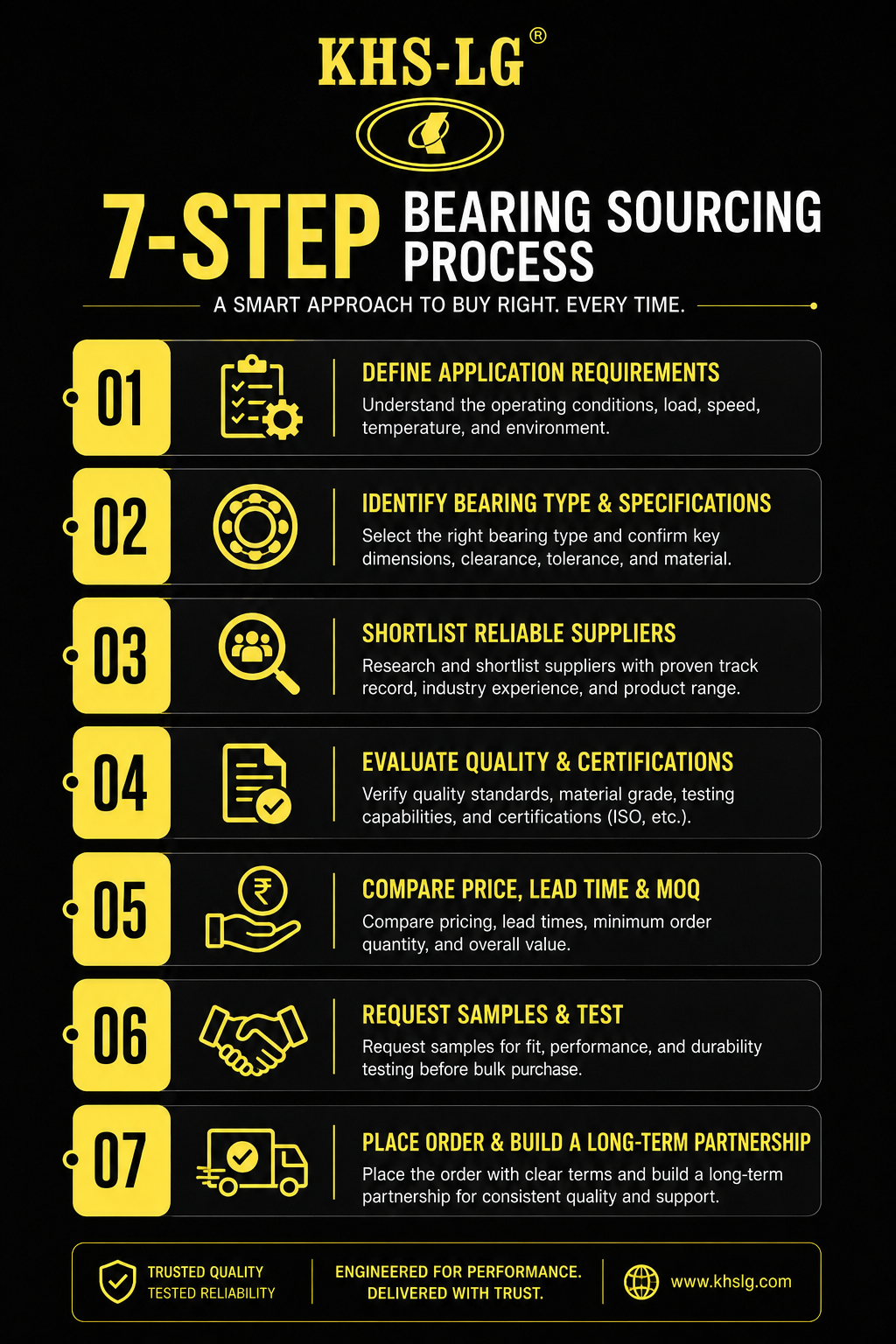
How to Source Bearings from a Supplier in Mumbai — Step by Step
Step 1: Define Your Application Requirements
Before contacting any bearing supplier, document the application: shaft diameter, housing bore, operating speed (RPM), radial and axial loads, operating temperature, environment (moisture, dust, chemical exposure), and required service life. This information drives every selection decision downstream.
Step 2: Identify the Bearing Type and Precision Class
Using the application data, determine the bearing type and the required ISO tolerance class P0 for standard industrial use; P6, P5, P4, or P2 for progressively higher precision demands in machine tools, spindles, and precision instruments. If unsure, a technically competent supplier can assist but they need your application parameters to do so meaningfully.
Step 3: Identify and Shortlist Suppliers
Identify bearing suppliers in Mumbai who consistently stock your required bearing type and brand. Prioritise suppliers who carry your series across multiple size variants, have verifiable brand authorisations, and have demonstrable experience in your industry sector.
Step 4: Request a Technical Quotation
A complete quotation should include: part number, brand, quantity, unit price, GST rate and amount, freight terms, lead time, and stock status available from current stock or to be sourced. Request a certificate of conformity with the order.
Step 5: Evaluate the Supplier’s Response Quality
The quality of a supplier’s first interaction with your enquiry is predictive of how they will support you over time. Did they simply send back a price? Or did they confirm the specification fits your application, ask clarifying questions about operating conditions, and flag relevant considerations? Technical engagement at the enquiry stage is a strong positive signal.
Step 6: Inspect the Bearing on Receipt
Before installation, inspect every bearing on arrival:
- Correct part number and brand marking on the bearing and packaging
- No visible corrosion, surface pitting, or handling damage
- Smooth cage movement with no rough spots or grinding
- Original sealed packaging intact where applicable
- Date code or batch code visible for traceability
Step 7: Confirm Installation Parameters Before Fitting
Bearing installation is where a significant proportion of premature failures begin. Confirm the correct shaft and housing fit tolerances per ISO 286, use appropriate installation tooling never apply force directly to a bearing ring and apply the correct lubricant type and quantity for the operating conditions. When in doubt, consult the supplier’s technical team before fitting, not after.
Source Bearings with Technical Confidence
KHS-LG supplies precision bearings, linear motion products, and engineering components to OEMs, plant maintenance teams, and industrial businesses across Mumbai and India. From deep groove ball bearings to cylindrical roller, needle roller, angular contact, and linear series our team combines product depth with the technical knowledge to match the right bearing to your application. Get in touch to discuss your requirement.
→ Request a Quote from KHS-LG
Frequently Asked Questions
What types of bearings are most commonly sourced from suppliers in Mumbai?
Deep groove ball bearings are the highest-volume category, followed by cylindrical roller, angular contact, needle roller, and spherical roller bearings. Suppliers serving Mumbai’s industrial and OEM markets typically carry across all major series. For linear motion applications, some suppliers also stock linear guide rails, ball screw support units, and linear bushings alongside rotating element bearings.
How do I verify that bearings I am purchasing are genuine and not counterfeit?
Check for consistent brand markings on the outer ring precisely engraved, not stamped or painted. Authentic bearings carry full series designations, country of manufacture markings, and in many cases date codes or batch codes. For high-value or regulated applications, request a certificate of conformity traceable to the manufacturer. A reputable bearing supplier in Mumbai should provide this without hesitation.
What is the difference between a bearing distributor and a bearing manufacturer in Mumbai?
Most companies operating as bearing suppliers or stockists in Mumbai are distributors they source from Indian or international manufacturers and supply to end users, OEMs, and resellers. Companies that actually manufacture bearings are fewer and typically operate at volume. For most industrial procurement requirements, a well-stocked distributor with verified brand authorisations and technical competence serves the need effectively.
Can a bearing supplier in Mumbai support OEM procurement requirements?
Yes, but OEM procurement has specific requirements: consistent part specifications across multiple orders, batch-specific traceability, volume pricing structures, and complete documentation. When evaluating a supplier for OEM supply, confirm their ability to maintain specification consistency and provide documentation as a standard part of the transaction not as an exception.
How do I know which bearing tolerance class I need for my application?
ISO tolerance classes range from P0 (standard, suitable for the majority of general industrial applications) to P2 (ultra-precision). P0 covers pumps, fans, conveyors, and general machinery. P6 and P5 are appropriate for higher-speed motors and light machine tool applications. P4 is used in CNC spindles and precision machine tools. A technically capable bearing supplier can advise the correct class based on your operating speed, load conditions, and dimensional accuracy requirements.
What should I do if a bearing fails prematurely?
Retain the failed bearing and document the failure mode: surface fatigue and spalling, smearing, fretting corrosion, electrical erosion, cage fracture, or contamination damage. Each failure mode indicates a specific root cause overload, misalignment, inadequate lubrication, contamination ingress, incorrect fit, or electrical current passage. A competent bearing supplier will review failure evidence and help determine whether the issue is product-related, installation-related, or application-related. Replacing without investigating the root cause reliably produces the same failure on the same timeline.
Is there an advantage to sourcing from a local bearing supplier in Mumbai versus buying online?
For standard, high-volume, common-series bearings, online procurement can be cost-competitive and convenient. However, for application-specific selection, specialty or precision grades, urgent breakdown requirements, or OEM documentation needs, a local supplier offers technical dialogue, faster response for critical spares, the ability to inspect before purchase, and direct accountability for the advice they provide. A mature industrial procurement strategy uses both channels, matched to the nature of the requirement.
Conclusion
The bearing supplier you choose is a supply chain decision, not just a purchase. In a city like Mumbai where manufacturing timelines are unforgiving, industries are diverse, and equipment downtime is directly measurable in rupees per hour the difference between a technically equipped supply partner and a transactional reseller shows up precisely when you can least afford it.
The right bearing supplier asks the right questions before they quote. They carry the product depth your operations require. They provide documentation that stands up to OEM audits and quality inspections. And when something goes wrong, they help you understand why not simply hand you a replacement and close the ticket.
KHS-LG supplies precision bearings, linear motion products, and engineering components to industrial buyers, OEMs, and plant teams across Mumbai and India. Whether you have a specific requirement in front of you or want to evaluate your current supply chain, our technical team is available to assist.
Get in touch — khslg.com

Comments are closed.